Making hospitality a respected long-term career
Thailand’s hospitality industry offers wide-ranging opportunities for young people. However, employers now need more than traditional service skills. Students must communicate confidently, use digital systems and understand sustainable operations. They must also solve problems in real time. Practical workplace experience is therefore becoming central to effective hospitality education.
A major source of jobs and opportunity
Tourism remains a major part of Thailand’s economy. It directly supported 12% of national employment in 2024. It also generated 5.5% of the country’s GDP. Thailand welcomed 35.5 million international visitors during 2024. The country also recorded 131.6 million domestic overnight visitors. These figures underline the scale of future demand for trained service professionals.
The workforce challenge is already clear. In 2025, the Thai Government launched a programme to train 100,000 people across 62 provinces. Vocational and university students formed one of its main target groups. The programme included tourism, hospitality and English-language training. Thailand expanded this approach in July 2026. The Office of the Vocational Education Commission joined 33 other organisations in a new national partnership. Government bodies, education institutions and industry organisations signed the three-year agreement. The partners will help develop curricula and share training resources. They will also exchange knowledge and new technology. The central goal is to align education more closely with tourism employers’ needs.
Hospitality careers are becoming more diverse
Hospitality education was once associated mainly with hotels and restaurants. Today, it can lead to careers across a much larger service economy. Students may work in airport services, catering, attractions, events, wellness, travel operations or digital distribution. They can also enter sales, revenue management, guest experience, sustainability or tourism entrepreneurship.
The ASEAN tourism qualifications framework helps make these pathways clearer. It covers food and beverage, food production, front office and housekeeping. It also includes travel agencies and tour operations. The framework provides progression from certificate to advanced diploma levels. It can help students see an entry-level role as the beginning of a career.
Building the right combination of skills
Technical competence remains essential. Students need to understand reception, reservations, room operations, food preparation and service standards. Thailand’s 2024 vocational hotel curriculum reflects this broad requirement. It covers front office, housekeeping, food and beverage service, and Western cookery. It also includes English, digital literacy, sustainability, safety, labour law and tourism marketing. These subjects should not operate in isolation. Students need opportunities to combine them while serving guests and completing workplace tasks.
English remains especially important. It helps students welcome visitors, explain services and respond to problems. Additional languages can strengthen opportunities in selected visitor markets. Human skills are equally important. Hospitality depends on listening, empathy, teamwork and professional behaviour. Students must remain calm when guests are tired, disappointed or confused.
Digital skills now affect almost every department. Students may use booking platforms, property-management systems and digital payments. They may also work with customer data, online reviews, chatbots and AI-supported tools. Technology should improve service without removing its human character. Students must therefore learn when to use a system and when personal attention matters more.
Sustainability must become a practical skill
Hotels and tourism businesses are under pressure to reduce waste and resource use. New staff should understand energy conservation, water management and responsible purchasing. They should also learn about food waste, recycling and local supply chains. These subjects become more meaningful when students practise them in real operations.
A 2025 study examined 409 Generation Z hospitality students in Thailand. It found positive links between work-integrated learning and sustainable hospitality competence. A green mindset played an important role in that relationship. The finding suggests that sustainability cannot remain a classroom topic. Students should see how responsible practices affect daily decisions, costs and guest experiences.
Why structured workplace learning matters
Classrooms and training laboratories provide safe places to learn basic skills. They cannot reproduce every pressure found in a busy hospitality business. Work-based learning exposes students to real guests, service standards and teamwork. It helps them connect theory with workplace decisions. Thailand has already built a significant dual vocational education system. On 5 August 2026, OVEC’s dashboard recorded 119,302 dual-system learners. They represented 22.77% of all learners shown in the system. However, a placement only succeeds when it has educational value. Students should not become temporary workers without clear learning goals.
A quality placement needs a written plan, a trained mentor and regular feedback. It should include safe working conditions and fair treatment. Students also need an assessment of the skills they have developed. Rotations can provide a fuller understanding of the business. A student might spend time in reception, housekeeping, food service and events. This experience helps the student discover personal strengths and career interests. Employers also benefit from well-designed placements. They can develop future staff and identify promising recruits. Their feedback can help education institutions keep courses relevant.
Thailand as a living classroom
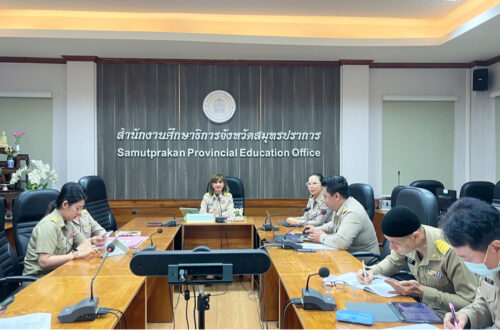
Provinces such as Samut Prakan have a distinct advantage in hospitality education. Suvarnabhumi Airport is located in the province’s Bang Phli District. Samut Prakan also has many hotels, restaurants, visitor services and major cultural attractions. The Ancient City and the Erawan Museum attract visitors from Bangkok and overseas. Local food, coastal communities and Bang Pu provide further learning opportunities. Students can therefore gain practical experience across several types of service organisation. These opportunities extend beyond hotel departments to airport hospitality, events, visitor attractions and community-based tourism.
The province also has experience in dual vocational education. Samut Prakan Technical College records dual hotel programmes dating back to 2002. It later added tourism training. Samut Prakan Vocational College has also developed pathways in hospitality, tourism, food and beverage services. A stronger provincial network is being build on this foundation. Schools providing career guidance, while colleges focus on delivering technical education. More employers could be encouraged to offer structured placements and trained workplace mentors. Public agencies can identify skills needs and connect education and industry partners. Professional bodies can also support assessment and recognised certification
Making hospitality a respected long-term career
Students and families need accurate information about hospitality careers. The sector involves demanding work, including evenings, weekends and busy holiday periods. It also offers mobility, international experience and routes into management. Skilled professionals can build careers in operations, technology, sales, training and business ownership.
Career guidance should explain both sides honestly. Students need realistic expectations and a visible route for progression. Training must also remain inclusive. Young women, students with disabilities and learners from lower-income families should have equal access. They should receive the support needed to complete placements and progress into leadership.
Preparing students for lifelong learning
No curriculum can predict every future technology or guest expectation. Education must therefore develop confidence, curiosity and adaptability. The strongest hospitality graduates will combine technical ability with care for people. They will use technology responsibly and protect the environment. They will also continue learning throughout their careers.
For Thailand, this creates an important opportunity. The country can connect education with a diverse, international service economy. Strong partnerships can give students practical skills and clearer routes into meaningful employment. By investing in high-quality training today, Thailand can strengthen the hospitality workforce of tomorrow.