
Thailand’s Largest Urban Rooftop Garden at Dusit Central Park, Bangkok
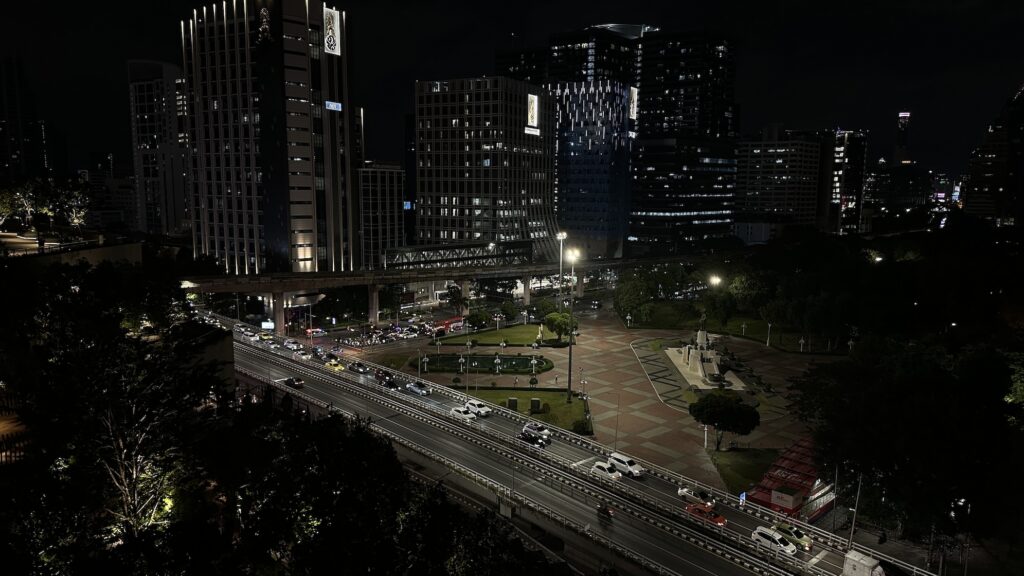
Bangkok is a city I usually experience at street level, where movement, noise, and heat define the rhythm of daily life. That is why visiting Thailand’s largest urban rooftop garden at the new Dusit Central Park development felt genuinely different. Rising above the busy Silom–Rama IV intersection, this elevated green space offers a rare sense of scale, calm, and thoughtful urban design.
The rooftop garden spans tens of thousands of square metres and unfolds across multiple interconnected levels, rather than a single flat deck. This layered approach makes the space feel expansive and dynamic. Gently sloped walkways link each level, allowing visitors to move naturally through the garden without abrupt changes in elevation. As I walked, the transition from one zone to another felt intentional, almost like moving through a series of outdoor rooms.
Water plays a strong role in the garden’s design. Shallow reflecting pools, narrow water channels, and planted water features help cool the surrounding air and soften the space visually. The sound of moving water adds a subtle background rhythm that contrasts sharply with the traffic noise below. On a warm Bangkok afternoon, the cooling effect is noticeable and welcome.
The planting palette focuses on native and climate-appropriate species. Large shade trees, including varieties commonly used in Thai urban landscapes, provide broad canopies along walking routes and seating areas. Palms, flowering trees, ornamental grasses, and low-lying tropical shrubs add texture and seasonal colour. The use of native species supports biodiversity and reduces long-term maintenance demands, reinforcing the project’s sustainability goals.
One of the most striking aspects of the garden is how it frames the city. Several elevated viewpoints have been carefully positioned to capture panoramic views of Lumpini Park, the surrounding skyline, and key landmarks. These spots naturally draw people in. During my visit, I noticed many visitors pausing for photos. Certain corners have already become clear Instagram moments, especially where greenery meets open sky, water features reflect the towers beyond, or walkways lead the eye toward the cityscape.
What I appreciated most is that the garden feels genuinely public. It is not designed as a decorative rooftop seen only from above, but as a lived-in space. Office workers take breaks here. Visitors stroll, sit, and linger. The design encourages both movement and stillness.
Standing there, it was impossible not to reflect on the site’s history as the former home of the Dusit Thani Bangkok. Dusit Central Park respects that legacy while presenting a forward-looking vision of how dense cities can reintroduce nature at scale.
I left the rooftop garden feeling that this space represents something important for Bangkok. It shows that green infrastructure can be ambitious, accessible, and beautifully integrated into the city’s fabric. More than just a viewpoint or photo stop, this garden is a place to slow down and see Bangkok differently — from above, in the shade, and surrounded by green.
FAC




You May Also Like

Jaturon Phakdeewanich, Director General, Department of Tourism, Thailand – Thai International Travel Fair 2026
Visa’s 2026 – Thailand ranks among Asia Pacific travellers’ top five destinations in Visa study
