Thailand Strengthens Vocational Education with Opening of New Phradabos Foundation Campus in Samut Prakan
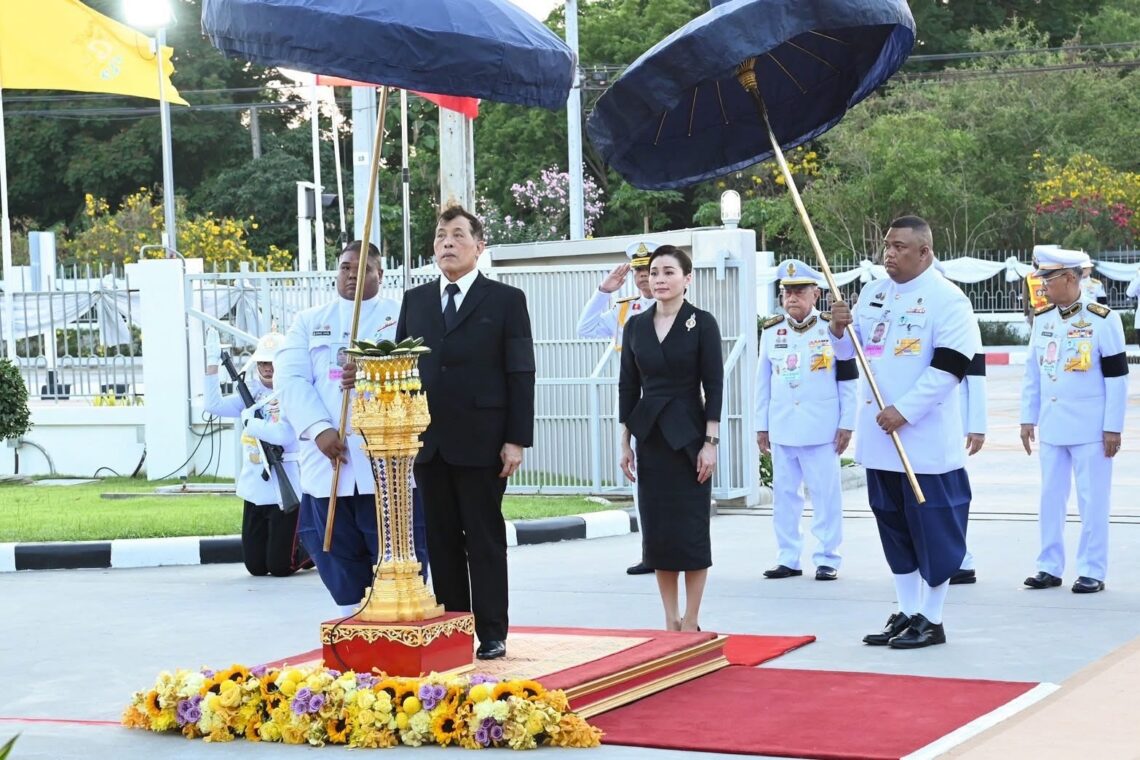
Their Majesties King Maha Vajiralongkorn and Queen Suthida Bajrasudhabimalalakshana presided over the official opening of the new Phradabos Foundation building and Phradabos School in Bang Phli District, Samut Prakan, on 22 March 2026, reinforcing Thailand’s long-standing commitment to inclusive, skills-based education under royal initiative.
The ceremony marked a significant milestone in the continued expansion of one of Thailand’s most established vocational education programmes. Their Majesties were received by Surayud Chulanont, President of the Privy Council and Chairman of the Phradabos Foundation, alongside senior officials, foundation board members, and education representatives.
Proceedings began with traditional religious rites at a ceremonial pavilion, where His Majesty formally inaugurated the new campus by unveiling the foundation’s signboard. The occasion was further commemorated with the planting of Yellow Star trees by Their Majesties, symbolising growth, continuity, and national development.
Founded in 1975 under the Royal Initiative of Bhumibol Adulyadej, the Phradabos Foundation was established to address educational inequality by providing vocational training opportunities to underprivileged individuals lacking financial resources. The foundation was formally registered in 1990 and has since evolved into a nationally recognised model for practical, skills-based learning.

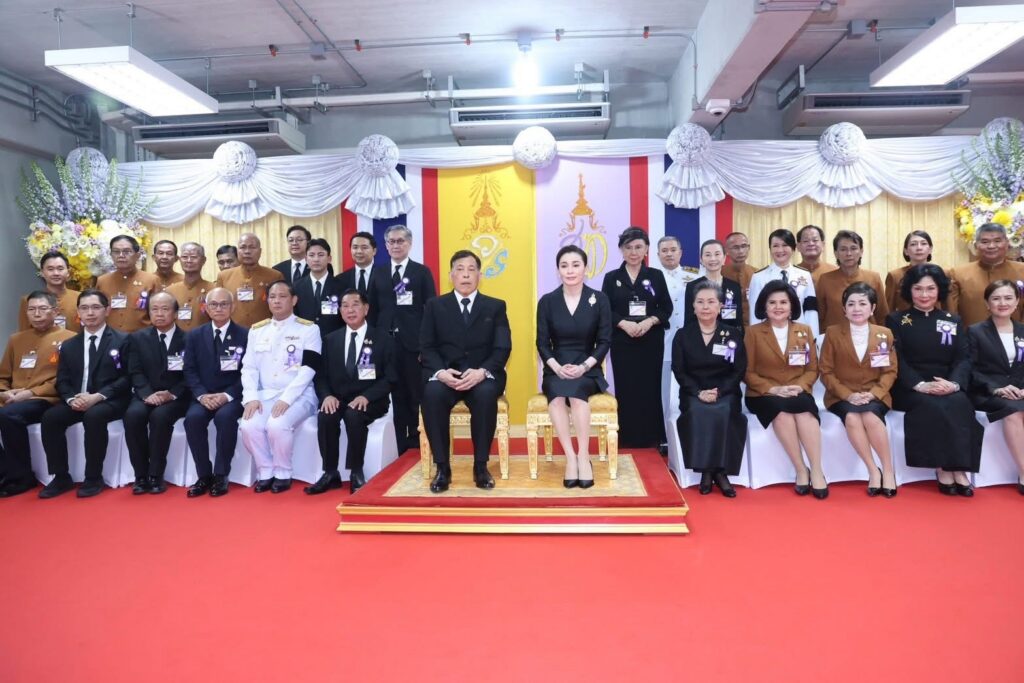
His Majesty King Maha Vajiralongkorn serves as Honorary Chairman of the foundation, with Her Royal Highness Maha Chakri Sirindhorn as Honorary Vice Chairman, ensuring continuity of the royal vision for accessible education and social mobility.
The newly opened campus in Bang Phli represents a major infrastructure investment in vocational education. Spanning more than 15 rai, the development comprises ten purpose-built buildings alongside a dedicated sports complex, designed to support an expanding student population and enhance both academic and practical training environments.
At the core of the institution is the one-year “Phradabos Certificate” programme, which delivers hands-on training across nine vocational disciplines. These include electrical engineering, automotive mechanics, and sustainable agriculture—fields aligned with Thailand’s evolving economic and industrial priorities. The curriculum is structured to prioritise practical experience, ensuring graduates are equipped with job-ready skills upon completion.
Since its inception, the foundation has graduated 61 cohorts, with a total of 3,778 students successfully completing the programme. Many graduates have progressed into stable employment, contributing to household incomes and supporting broader community development.
A defining feature of the Phradabos model is its fully residential, tuition-free structure. Students receive not only technical training but also moral and social guidance, reflecting the foundation’s holistic approach to education. This integrated model aims to foster discipline, responsibility, and self-reliance—qualities considered essential for long-term personal and professional success.
The opening of the new Samut Prakan campus comes at a time when vocational education is increasingly recognised as a critical driver of economic resilience and workforce development across Southeast Asia. Thailand’s continued investment in such initiatives highlights the importance of bridging skills gaps, particularly among underserved communities.
From a broader perspective, the Phradabos Foundation represents a sustained example of how royal-led educational initiatives can deliver tangible socio-economic impact. By combining accessible education with industry-relevant training, the programme supports national development objectives while offering individuals a clear pathway to employment and improved quality of life.
For the travel and tourism sector, particularly in regions such as Samut Prakan and greater Bangkok, initiatives like Phradabos also contribute indirectly to service quality and workforce capability. Skilled graduates entering sectors such as engineering, maintenance, and agriculture underpin the infrastructure and supply chains that support Thailand’s wider tourism economy.
The official opening of the new campus therefore stands not only as a ceremonial milestone, but as a continuation of a long-term national investment in people, skills, and sustainable development—an approach that remains central to Thailand’s social and economic strategy.


You May Also Like

Paying Respects to Her Majesty Queen Sirikit, the Queen Mother

Deputy Director-General of the International Organizations Department delivers opening remarks at Chulalongkorn Model United Nations Conference 2026
