Thailand Advances 450-Baht Visitor Fee and New Sustainable Tourism Measures
Thailand has moved forward with a proposed 450-baht fee for foreign visitors as part of a wider plan to increase the value, quality and sustainability of its tourism industry.
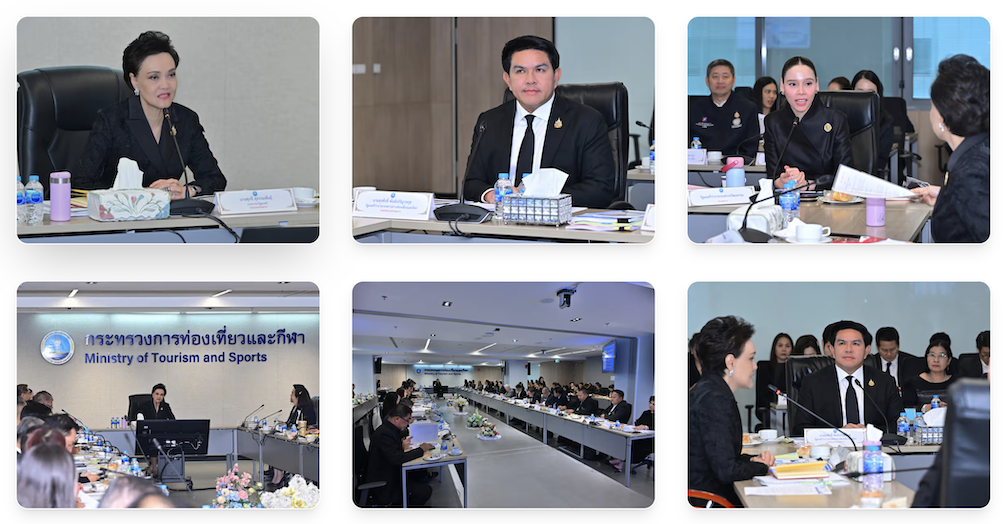
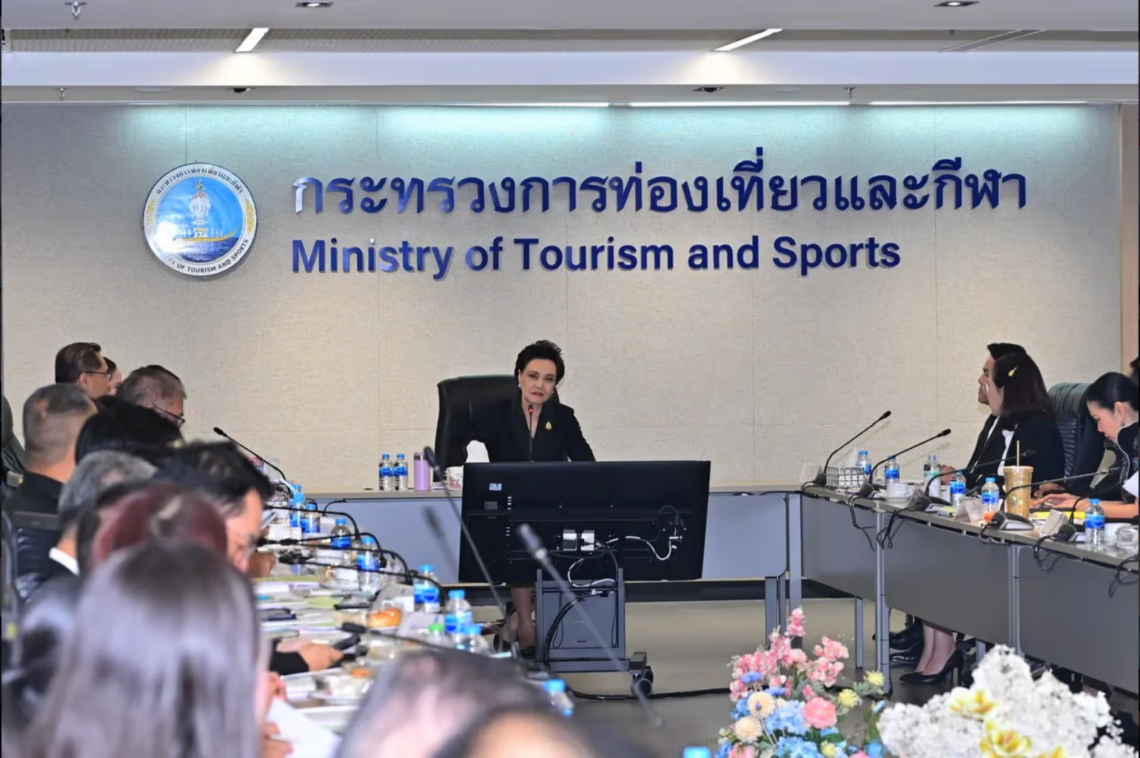
The proposal was considered during the first meeting of Thailand’s National Tourism Policy Committee for 2026, held at the Ministry of Tourism and Sports in Bangkok on 14 August. The meeting was chaired by Deputy Prime Minister and Minister of Commerce Suphajee Suthumpun.
The committee also advanced plans to raise accommodation and activity-safety standards, bring informal lodging businesses into an appropriate regulatory system and connect four designated sustainable-tourism areas more closely with government policy and budgets. Sukhothai, Si Satchanalai and Kamphaeng Phet are also being promoted as a pilot area for the sustainable management of tourism at a World Heritage property. The measures form part of Thailand’s continuing move towards “Value over Volume”. The policy places greater emphasis on visitor spending, longer stays, service quality, local economic benefits and environmental management instead of measuring success primarily through arrival numbers.
Thailand’s Ministry of Tourism and Sports: National Tourism Policy Committee announcement
Proposed 450-baht foreign visitor fee
The National Tourism Policy Committee approved the principles and draft notification governing a domestic tourism fee for foreign visitors. The proposal will now proceed through a public consultation process before returning to the committee and being submitted to the Cabinet. Post-meeting reporting, quoting Minister of Tourism and Sports Surasak Phancharoenworakul and ministry permanent secretary Natthriya Thaweevong, said the proposed rate is 450 baht per foreign visitor. The same rate has been proposed for arrivals by air, land and sea.
The plan is expected to be introduced in phases. Air arrivals would be covered first. Land and sea collection would follow after additional preparation because of the operational complexity and congestion at busy border crossings, particularly those used regularly by Malaysian visitors. Payment options being considered include collection through passenger tickets, an official website, a mobile application and payment kiosks. The draft also addresses exemption categories, although the final rules have not yet been published.
If the consultation and approval process proceeds as planned, officials have indicated that collection could begin from approximately April 2027. The measure would still require Cabinet approval, publication in the Royal Gazette and an implementation period before taking effect. The important point for travellers and the travel trade is that the 450-baht fee is a proposal. It is not currently being collected. Its rate, exemptions, payment system and implementation date remain subject to the legal and consultation process.
InfoQuest report on the proposed rate, consultation and implementation
Funding tourism development and visitor protection
The legal foundation for a foreign visitor fee was created through the 2019 amendment to Thailand’s National Tourism Policy Act. Section 10/2 allows the National Tourism Policy Committee to ask the Cabinet to approve a fee to support tourism administration and development and to fund insurance for foreign visitors travelling in Thailand.
The Ministry of Tourism and Sports said in a separate update on 11 August 2026 that the new draft covers the fee framework, exemptions and payment channels. Revenue would be directed towards tourism development and insurance protection for international visitors. This gives the proposal a broader purpose than simply raising revenue. The fund is intended to support destination infrastructure, safety, visitor protection, tourism research and workforce development. However, the credibility of the measure will depend on clear information about insurance coverage, exemptions, payment procedures and how the collected funds are allocated.
The proposed 450-baht rate updates an earlier model under which travellers arriving by air would have paid 300 baht and those entering by land or sea would have paid 150 baht. That earlier plan was postponed and never introduced. Officials said the revised figure was calculated using updated economic and inflation data.
Ministry of Tourism and Sports: August 2026 update on the visitor-fee framework
Thai Government Public Relations Department: background to the earlier fee proposal
Higher standards for homestays, glamping and outdoor activities
Accommodation reform was another major item at the policy meeting. The committee wants to improve service quality and safety while creating a practical route for accommodation businesses operating outside the current legal system to become regulated. The proposed approach includes revising the Thai Homestay Standard to cover properties with no more than eight rooms and a maximum of 30 guests. Camping standards would be expanded to include conventional campsites, glamping and recreational vehicles.
The committee also called for stronger safety standards for canoeing and kayaking. These activities are widely offered by coastal, island, river and community-based tourism operators, making consistent risk management, equipment requirements and operating procedures important for both visitors and providers. For accommodation operating outside the formal system, the government plans to review regulation according to the level of risk involved. Home Lodge and Thai Homestay standards could be used to help smaller operators improve quality and move into an appropriate legal framework.
The detail will matter. A proportionate route into regulation could strengthen safety and consumer confidence without imposing hotel-scale requirements on small family and community businesses. Operators will need to monitor the final definitions, inspection requirements and transition arrangements.
Four designated areas linked to national policy
The committee backed a stronger area-based approach to sustainable tourism. Strategic plans prepared by the Designated Areas for Sustainable Tourism Administration, known as DASTA, are to be advanced for four locations: the Mu Ko Chang archipelago and surrounding area, the Songkhla Lake basin, Chiang Rai and Khung Bang Kachao.
The intention is to recognise these plans within the national tourism-policy framework and connect them more directly with budget allocation and the work of relevant government bodies. Each area presents a different destination-management challenge. Mu Ko Chang combines islands, marine resources, resorts and local communities. The Songkhla Lake basin links wetlands, fishing communities, cultural heritage and local products across a large southern landscape. Chiang Rai combines creative tourism, ethnic and community heritage, nature and wellness potential. Khung Bang Kachao is a green river bend in Samut Prakan, close to Bangkok, where cycling, community tourism and ecological protection must be balanced with growing visitor demand.
DASTA describes Khung Bang Kachao as an area of approximately 11,000 rai, or 17.6 square kilometres, encircled by the Chao Phraya River. Its proximity to Bangkok makes it a popular half-day and day-trip destination. In Chiang Rai, DASTA has been developing community-based and creative-tourism experiences and supported the province’s positioning within the UNESCO Creative Cities Network.
DASTA: Thailand’s designated sustainable-tourism areas
DASTA guide to Khung Bang Kachao
DASTA community-based tourism work in Chiang Rai
World Heritage tourism pilot
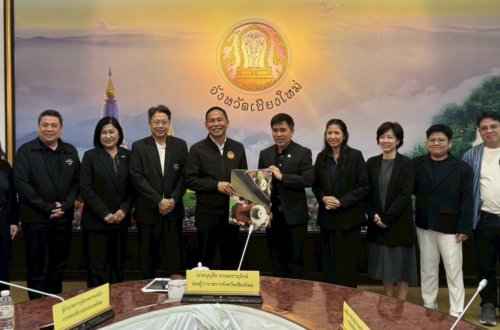
The connected historic towns of Sukhothai, Si Satchanalai and Kamphaeng Phet are being promoted as a model for the sustainable management of tourism in a World Heritage area.
UNESCO inscribed the Historic Town of Sukhothai and Associated Historic Towns on the World Heritage List in 1991. Although spread across three locations, the ancient towns form one serial World Heritage property covering 11,852 hectares.
Sukhothai was the political and administrative capital of the first Kingdom of Siam. Si Satchanalai developed as a spiritual centre and an important ceramic-production centre, while Kamphaeng Phet served as a fortified frontier town. The three were connected by shared political, cultural and water-management systems.
They are managed as three historical parks under Thailand’s Fine Arts Department, with management coordinated across the single World Heritage property. Using the area as a tourism-management pilot could help link heritage conservation, visitor movement, interpretation, local enterprise and public investment across provincial and administrative boundaries.
UNESCO World Heritage Centre: Historic Town of Sukhothai and Associated Historic Towns
Value over Volume becomes a broader government policy
The August meeting builds on the Third National Tourism Development Plan for 2023–2027. That plan is organised around resilient tourism, quality tourism, visitor experience and sustainable tourism. Thailand has also started preparing its fourth plan for 2028–2032, with “Value over Volume” identified as a central direction. The economic importance of the transition is considerable. The OECD reports that tourism directly accounted for 5.5 per cent of Thailand’s GDP and 12 per cent of employment in 2024. It describes the country’s current priorities as improving tourism quality, decentralising benefits, raising safety and service standards, using data more effectively and managing environmental pressures.
Thailand welcomed more than 14 million international visitors between 1 January and 2 June 2026, generating approximately 679 billion baht in international tourism revenue. The Tourism Authority of Thailand has projected approximately 33 million international arrivals and total tourism revenue of about 2.65 trillion baht for 2026. Those figures show why the policy is not a rejection of tourism growth. It is an attempt to change the type and distribution of growth by encouraging higher-value experiences, stronger standards and wider benefits for communities and businesses.
OECD Tourism Trends and Policies 2026: Thailand
TAT Newsroom: Thailand Tourism Update at TTM+ 2026
Ministry of Tourism and Sports: preparation of the Fourth National Tourism Development Plan
What happens next
The proposed visitor fee will be the most immediately visible measure for international travellers, but the wider package may have a more lasting effect on Thailand’s tourism industry. The public consultation will be a key stage. Airlines, border authorities, accommodation providers, tour operators and travellers will need clarity about collection channels, exemptions, repeat entries and insurance entitlements. The accommodation proposals will require detailed regulations that distinguish small community enterprises from larger commercial properties while maintaining credible safety standards.
For the four DASTA areas and the Sukhothai World Heritage pilot, the next test will be whether national recognition leads to coordinated budgets, measurable conservation outcomes and tangible income for local communities.
The Ministry of Tourism and Sports said relevant proposals considered by the National Tourism Policy Committee will be submitted to the Cabinet for policy approval and implementation. Until that process is complete, the measures should be regarded as an important statement of direction rather than final operating rules.